Why Did Hemp Disappear from the Great Textbooks?
There was a time when hemp sat in respectable reference books without apology. It appeared in encyclopedias as fiber, seed, crop, botany, commerce, rope, cloth, oil, and pharmacology. It belonged to the world of merchan…
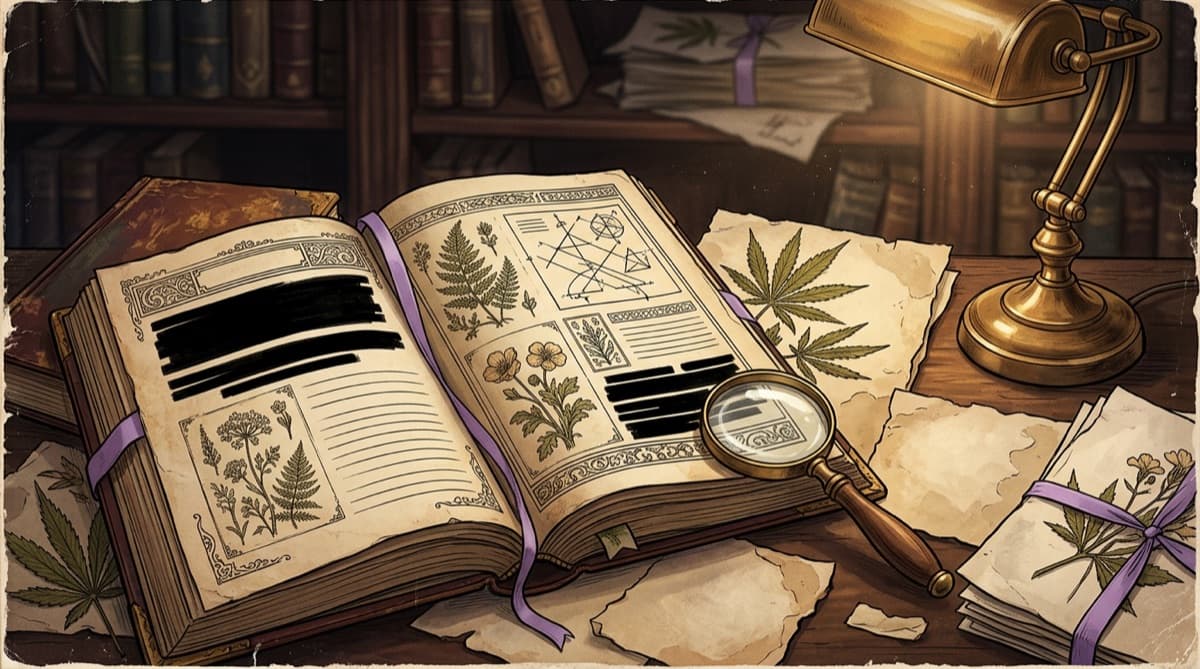
There was a time when hemp sat in respectable reference books without apology. It appeared in encyclopedias as fiber, seed, crop, botany, commerce, rope, cloth, oil, and pharmacology. It belonged to the world of merchants, agronomists, pharmacists, naval planners, and editors. Then, over the twentieth century, the plant seemed to slip out of that dignified shelf-space and reappear elsewhere: in police language, moral panic, narcotics law, and cultural suspicion.
That shift is the real mystery behind the question, “Why did hemp disappear from the great textbooks?” The short answer is: it did not vanish because it stopped mattering. It was pushed out by a convergence of industrial change, legal stigma, and a new political vocabulary that collapsed several different stories of the cannabis plant into one anxious category.
When hemp still belonged to encyclopedias
One of the clearest snapshots comes from the 1911 Encyclopaedia Britannica entry on hemp. It describes Cannabis sativa in the plain language of botany and industry: bast fiber, seed oil, sail cloth, rope, sacks, cultivation zones, and commercial uses. It also notes something revealing for our theme: by that date, some ordinary hemp applications were already being displaced by jute. In other words, hemp’s retreat from the center of practical knowledge had already begun as an economic story before it hardened into a legal one.
That matters. If we tell the story only as censorship, we miss half the truth. Hemp did not lose visibility solely because governments feared intoxicants. It also lost ground because modern industry found cheaper, more standardized, or more convenient alternatives for many everyday uses.
A plant that once lived in pharmacopoeias
The other shelf where cannabis once lived respectably was medicine. Historical reviews note that cannabis entered the United States Pharmacopoeia in the nineteenth century and remained there until the early 1940s. In that world, cannabis was not “counterculture”; it was a drug standard, discussed in relation to dosage, extraction, and therapeutic use.
That is a very different knowledge regime from the one most people inherited later. A plant can survive politically controversial centuries and still remain respectable if physicians, pharmacists, and editors keep writing about it in sober language. Once those institutions stop doing so, the plant does not disappear from reality. It disappears from legitimacy.
The great compression: hemp became “marijuana”
The twentieth century’s decisive move was not merely prohibition. It was compression. Fiber hemp, medicinal cannabis, resinous drug preparations, colonial anxieties, anti-immigrant rhetoric, and public fear were increasingly squeezed into one blurry category in popular and political language.
The Marihuana Tax Act of 1937 was pivotal in the United States because it chilled legitimate cannabis use and helped shift the public frame away from agriculture and medicine toward suspicion and control. Even when distinctions existed on paper, they weakened in the public imagination. A plant once discussed in terms of cloth, seed, tincture, and commerce became easier to describe simply as a problem.
This is one of the most important reasons hemp “left the textbooks.” Respectable knowledge depends not only on facts, but on classification. Once classification becomes crude, public memory follows.
The wartime exception that proves the rule
And yet history immediately exposes the contradiction. During World War II, the U.S. Department of Agriculture promoted hemp in the official film Hemp for Victory, treating it as a strategic wartime crop for fiber and military applications. The plant that had become politically awkward suddenly turned useful again when rope, cloth, and supply chains mattered more than rhetoric.
That episode is powerful because it shows hemp had not become meaningless, obsolete, or unknown. It had become conditional. Respectability could be restored when the state needed cordage, but it could just as quickly be withdrawn when the emergency passed.
From economic plant to controlled substance
The international tightening of drug control deepened this shift. The 1961 Single Convention on Narcotic Drugs placed cannabis within a strong control framework and restricted it, in general, to medical and scientific purposes, while still carving out exceptions for cultivation exclusively for industrial fiber and seed. Legally, the distinction did not vanish completely. Culturally, however, nuance kept losing.
That gap between law and public understanding matters. Specialists might still distinguish hemp from drug cannabis, but schoolbooks, general reference culture, and everyday discourse tend to flatten what institutions no longer actively explain. A subject falls out of “great textbooks” not only when it is banned, but when nobody in the respectable center bothers to narrate it carefully anymore.
Why the knowledge field narrowed
So why did hemp disappear from the great textbooks? Because three stories converged at once.
First, industrial substitution reduced hemp’s practical centrality in some sectors. Jute, cotton, and later synthetic materials changed the economics of fiber.
Second, medical retreat removed cannabis from one of the most prestigious languages of legitimacy: the pharmacopoeia and the physician’s handbook.
Third, prohibitionist politics overwhelmed fine distinctions. In the public mind, hemp stopped being one chapter in the history of agriculture, shipping, medicine, and paper, and became attached to one increasingly dominant chapter: narcotics control.
When that happens, a plant may still exist in fields, archives, and specialist literature, yet vanish from the cultural places where educated societies summarize what is worth knowing.
It did not disappear. It was reassigned.
That is perhaps the most accurate way to put it. Hemp was not erased from reality. It was reassigned. From botany to bureaucracy. From commerce to control. From encyclopedia tone to warning tone.
And once that reassignment settles in, generations grow up thinking the old world never existed: that cannabis was always only scandal, always only vice, always only an argument. But the older record says otherwise. It was also fiber, sail cloth, birdseed, oil cake, tincture, empire, agriculture, and medicine. It once sat in serious books because serious institutions treated it as part of serious knowledge.
Recovering that fuller picture does not require nostalgia or romanticization. It requires historical honesty. The story is not that hemp was a miracle plant hidden by villains. The story is subtler, and in some ways more interesting: modern societies changed what kinds of knowledge they considered respectable, and the plant was pushed across that border.
At LIBRARY, that border is worth studying. Not because every old use should return, and not because every tradition deserves revival, but because language shapes memory. Once a culture forgets how it used to classify a plant, it also forgets how it used to classify risk, utility, medicine, and even common sense.
LIBRARY editorial voice
We do not romanticize prohibition’s opposite any more than prohibition itself. But we do take historical framing seriously. Hemp did not simply fall out of the world; it fell out of the respectable summary of the world. If you want to keep following that trail, continue with the FAQ, the catalog, and the LIBRARY blog like shelves in a reading room where certain books were once misfiled on purpose.
This material is for informational purposes only and does not replace medical or legal advice. Always follow local law.
Quick Answer
Hemp did not leave mainstream textbooks because it became useless; industrial substitution, removal from pharmacopoeias, and 20th-century prohibition pushed cannabis out of botany-and-commerce language into the language of control.
📚Sources & References
- 11911 Encyclopaedia Britannica — Hemp (Wikisource)
- 2Medicinal Cannabis: History, Pharmacology, And Implications for the Acute Care Setting (NCBI/PMC)
- 3Marihuana Tax Act of 1937 (Library of Congress PDF)
- 4Hemp For Victory, Circa 1942-1945 (National Agricultural Library, USDA)
- 5Single Convention on Narcotic Drugs, 1961 (UNODC PDF)