Reefer Madness and Harry Anslinger: How a 1930s Campaign Compressed Cannabis Into Fear
# Reefer Madness and Harry Anslinger: How a 1930s Campaign Compressed Cannabis Into Fear
Reefer Madness and Harry Anslinger: How a 1930s Campaign Compressed Cannabis Into Fear
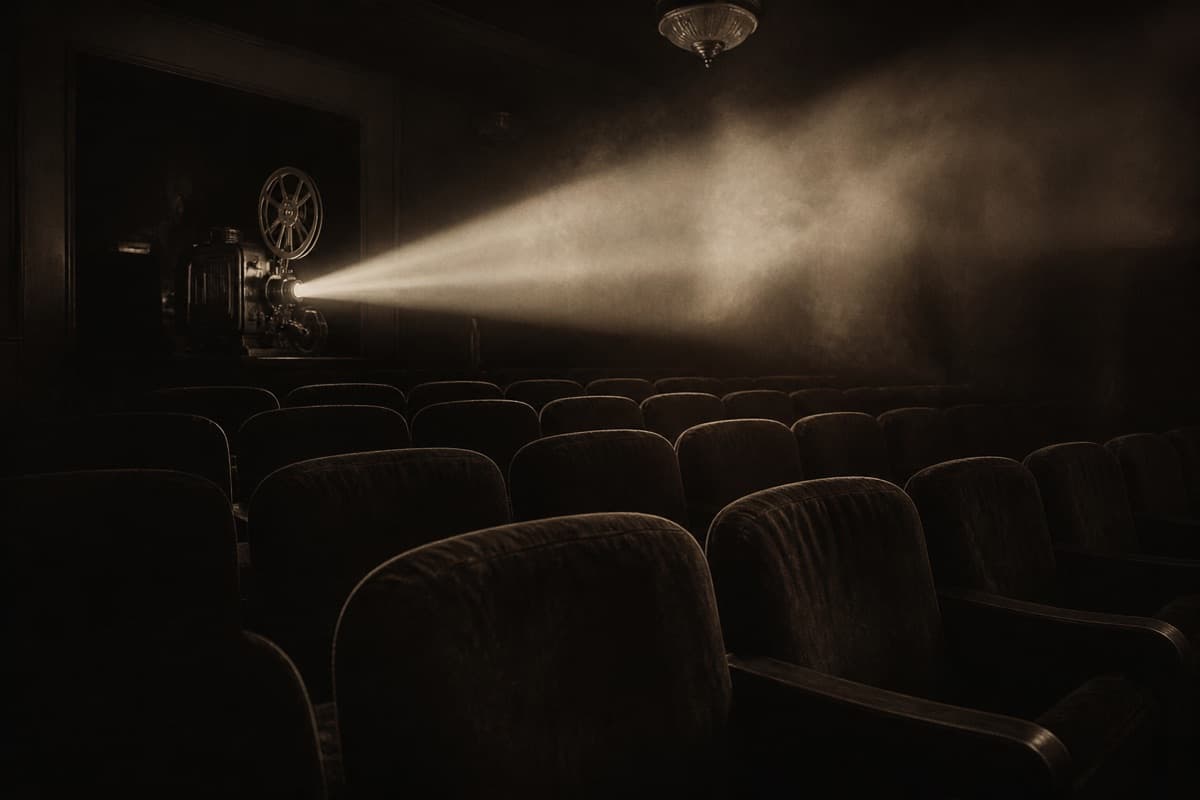
In 1936, a film called Tell Your Children opened in American towns with the solemn urgency of a public warning. Parents were told to watch closely. Educators were told to take notes. The plot promised to reveal what happened when decent teenagers encountered marijuana: madness, murder, suicide, sexual ruin, and the collapse of everything the middle class believed it had built. Later the same film would be re-cut, re-titled, and re-sold under a catchier name: Reefer Madness.
By then the word itself had already done half the work.
This article is the next shelf over from our earlier piece on why hemp disappeared from the great textbooks. There we traced how a respectable plant was pushed out of encyclopedias, pharmacopoeias, and commerce. Here the question is sharper and more theatrical: who turned that retreat into a moral emergency, and how?
The short answer is not one villain with a single lever. It was a campaign — part bureaucracy, part journalism, part cinema, part law — and at its center for decades stood Harry J. Anslinger, the first commissioner of the U.S. Federal Bureau of Narcotics.
1. Before the panic: cannabis America already knew
Americans in the early twentieth century did not discover cannabis on a crime blotter. They already knew it under other names and in other registers.
Physicians prescribed cannabis tinctures. Pharmacies stocked them. Agricultural papers discussed hemp as fiber. Patent medicines sometimes contained cannabis alongside opiates and alcohol. In the language of respectable knowledge, the plant still belonged partly to medicine and industry — not yet exclusively to police files.
That older world matters because prohibition rarely begins by erasing a plant from reality. It begins by changing the room it is discussed in. The same species that once appeared in pharmacopoeias and farm bulletins would soon be narrated mainly through jazz clubs, border crossings, asylum wards, and yellow headlines.
2. Harry Anslinger: the man who professionalized panic
Harry Jacob Anslinger was born in 1892 in Altoona, Pennsylvania, and died in 1975 after shaping U.S. drug policy for more than thirty years. He entered public life through the machinery of Prohibition, serving in diplomatic and enforcement roles that taught him how moral regulation could be administered as a career.
In 1930, Anslinger became commissioner of the newly formed Federal Bureau of Narcotics (FBN). The timing was not accidental. Prohibition culture had normalized the idea that certain substances required a permanent federal bureaucracy, permanent surveillance, and permanent rhetoric of crisis.
Anslinger was, by many accounts, an effective administrator: disciplined, politically connected, skilled at testimony, adept at turning a bureau into an empire of jurisdiction. He also became the country's most influential narrator of marijuana as social catastrophe.
Historians often debate how much one man can matter in a large cultural shift. In this case, the debate is narrower than it looks. Anslinger did not invent every fear alone. But he organized them: into congressional hearings, into press releases, into alliances with law enforcement, into a vocabulary that made cannabis feel newly urgent to people who had never encountered it at all.
3. Why "marijuana" and not "hemp"?
One of the campaign's most important moves was lexical.
Hemp sounded agricultural, industrial, old, almost boring. It evoked ropeyards, seed oil, fields, commerce. Marijuana — often spelled marihuana in official documents of the period — sounded foreign, modern, suspicious, and slightly unpronounceable in exactly the way moral panics prefer.
The word did not merely label a plant. It imported a story: something arriving from elsewhere, something tied to Mexican migration, to border towns, to night life, to cultures white middle-class newspapers did not claim as their own. Whether or not every listener consciously heard that story, the framing worked. Language narrowed the plant before law did.
This is what we mean by compression. Fiber hemp, medicinal cannabis, and resinous intoxicating use were not identical in botany, economics, or pharmacology. Yet in public speech they increasingly collapsed into one anxious object called marijuana.
If you have read our article on hemp and the textbooks, this is the political sequel: the moment respectable categories were not only forgotten, but actively replaced by a single category of fear.
4. The machinery: newspapers, doctors, and the Bureau
A moral panic is rarely only a mood. It is an apparatus.
Anslinger's bureau supplied structure: statistics, case files, testimony, requests for new powers. Newspapers supplied velocity: sensational crime stories, lurid photographs, headlines that treated correlation as prophecy. Local law enforcement supplied anecdotes. Medical authority supplied just enough white-coat language to make panic feel like prudence.
The system had a rhythm:
- A shocking incident was reported.
- Cannabis was implied as cause, context, or symbol.
- The Bureau translated the incident into policy necessity.
- Congress and the public were told the existing framework was dangerously incomplete.
It is worth stating plainly: the historical record does not support the idea that cannabis turned ordinary citizens into homicidal maniacs at scale. What the record does support is that such claims were repeated often enough, and loudly enough, to change institutions.
That distinction is everything. Prohibition does not require truth in every detail. It requires institutional repetition.
5. Reefer Madness and the cinema of warning
Reefer Madness occupies a strange place in cultural memory. Today it is often watched as camp: overwrought acting, absurd causality, a melodrama so pure it loops back into comedy. But in the late 1930s it belonged to a serious genre: exploitation cinema as civic instruction.
The film's plot follows a familiar panic script. Nice young people encounter marijuana through seductive criminals. One hit leads to another. Reason collapses. Violence follows. Sexual disorder follows violence. The state, or fate, delivers punishment. The audience is left with a simple lesson: this substance destroys the social order one teenager at a time.
Other films and pamphlets worked in the same register: Assassin of Youth, Marijuana, educational booklets, lecture tours, classroom warnings. The message varied in quality but not in direction. Cannabis was not presented as a plant with multiple histories. It was presented as a social solvent.
That is why Reefer Madness still matters historically even when watched ironically. It shows how fear could be packaged — edited, distributed, replayed — in the same commercial channels that sold entertainment. A warning could look like a movie. A movie could function as law's advance advertising.
6. The Marihuana Tax Act of 1937
The legislative climax of the campaign was the Marihuana Tax Act of 1937.
On the surface, the law was bureaucratic. It did not use the word "prohibition" in the blunt way later statutes would. It imposed registration, record-keeping, and tax requirements so burdensome that lawful handling of cannabis — including much medical and industrial use — became impractical. The practical effect was restriction dressed in administrative clothing.
Congressional hearings featured Anslinger's bureau prominently. Medical and industrial objections existed, but the emotional frame had already hardened: cannabis was a spreading menace requiring federal control now.
The Act is a hinge in U.S. history for three reasons:
-
It chilled legitimate commerce and medicine around cannabis.
-
It helped fix marijuana as the dominant public name for the plant.
-
It demonstrated how a moral story could become fiscal and legal architecture almost without breaking stride.
Once again, the plant did not vanish overnight from fields or pharmacies. It was reclassified in public life — moved from commerce and medicine toward surveillance and stigma.
7. Race, jazz, and the politics of who gets feared
Any honest account of this campaign must confront its racial grammar.
Anslinger's public statements — preserved in archives, newspapers, and congressional records — repeatedly linked marijuana to Black Americans, Mexican immigrants, and jazz musicians in language designed to trigger existing hierarchies of suspicion. The fear was never only pharmacological. It was social: who belonged, who performed modernity correctly, whose leisure looked like disorder.
Jazz clubs, night life, and cross-cultural urban spaces became symbolic staging grounds. Cannabis was portrayed not merely as a drug but as a solvent of racial and sexual boundaries — which, from the perspective of prohibitionist rhetoric, was precisely the danger.
This is one reason the 1930s campaign cannot be told as a simple science story. Evidence was selective. Anecdote was elevated. Cultural prejudice did real legislative work.
8. What got compressed together
By the end of the 1930s, several distinct histories had been forced into one public silhouette:
| What existed in reality | What the campaign preferred to narrate |
|---|---|
| Industrial hemp for fiber and seed | A foreign intoxicant called marijuana |
| Medical cannabis in pharmacies | A crime-causing vice |
| Long agricultural and pharmacological use | A sudden new epidemic |
| Complex regional and cultural practices | One uniform moral emergency |
That compression did not end in 1937. It scaled.
Anslinger remained commissioner until 1962. Under his long tenure, federal drug policy acquired momentum, institutional memory, and international ambition. Domestic panic connected to global control regimes — including the postwar system that would culminate in the 1961 Single Convention on Narcotic Drugs, which placed cannabis inside a strict international control framework.
The textbooks did not change because a botanist discovered new facts. They changed because the respectable center stopped telling the older story.
9. Myths worth separating from the record
Because this period attracts conspiracy as easily as scholarship, a few clarifications help.
-
Reefer Madness was real propaganda, but it was not the only source of stigma. Law, newspapers, and bureaucratic repetition mattered more than any one film.
-
Claims that the campaign was driven by a single corporate villain — nylon, timber, pharmacy — are contested among historians. Industrial interests may have aligned with prohibition at times, but the evidence does not support one neat hidden lever.
-
Anslinger was influential, but he also rode a wave: Prohibition's administrative habits, Depression-era anxieties, racial politics, and media appetite for moral spectacle.
Good history is rarely a cartoon. It is usually a coalition.
10. Why this story still matters
Today, many countries are revisiting cannabis law. Dispensaries, medical programs, hemp industries, and research laboratories coexist with old public memories. That coexistence can feel confusing only if we forget how recent the panic architecture really is.
Less than a century ago, cannabis still lived partly in the language of rope, seed, and tincture. Within a few decades it was rewritten as madness, crime, and national emergency. That rewrite was not inevitable. It was built — hearing by hearing, headline by headline, reel by reel.
At LIBRARY, that is the shelf we keep returning to: not to recycle nostalgia, and not to pretend every old use deserves revival, but to remember how quickly language can refile a plant from knowledge into fear. When a culture forgets that move, it becomes easier to confuse policy with nature and stigma with fact.
If you want to continue the trail, read our earlier piece on hemp and the textbooks, browse the FAQ, explore the catalog, or treat the LIBRARY blog as a reading room where the 1930s still have not fully left the building.
This material is for informational purposes only and does not replace medical or legal advice. Always follow local law.
Quick Answer
In the 1930s, Harry Anslinger and a coalition of bureaucracy, newspapers, and exploitation cinema reframed cannabis as marijuana — collapsing hemp, medicine, and intoxicating use into one category of fear, culminating in the Marihuana Tax Act of 1937.
📚Sources & References
- 1Marihuana Tax Act of 1937 (Library of Congress PDF)
- 2Harry J. Anslinger — Britannica
- 3Medicinal Cannabis: History, Pharmacology, And Implications for the Acute Care Setting (NCBI/PMC)
- 4Reefer Madness (1936 film) — Wikipedia
- 5The Marihuana Tax Act of 1937 — Schaffer Library of Drug Policy
- 6Single Convention on Narcotic Drugs, 1961 (UNODC PDF)