Cannabis, marijuana, and ganja: etymology and hidden meanings
One plant, three famous names, and three very different moods: cannabis sounds clinical, marijuana sounds political, and ganja sounds cultural, musical, almost ceremonial. Yet all three can point to the same species. Th…
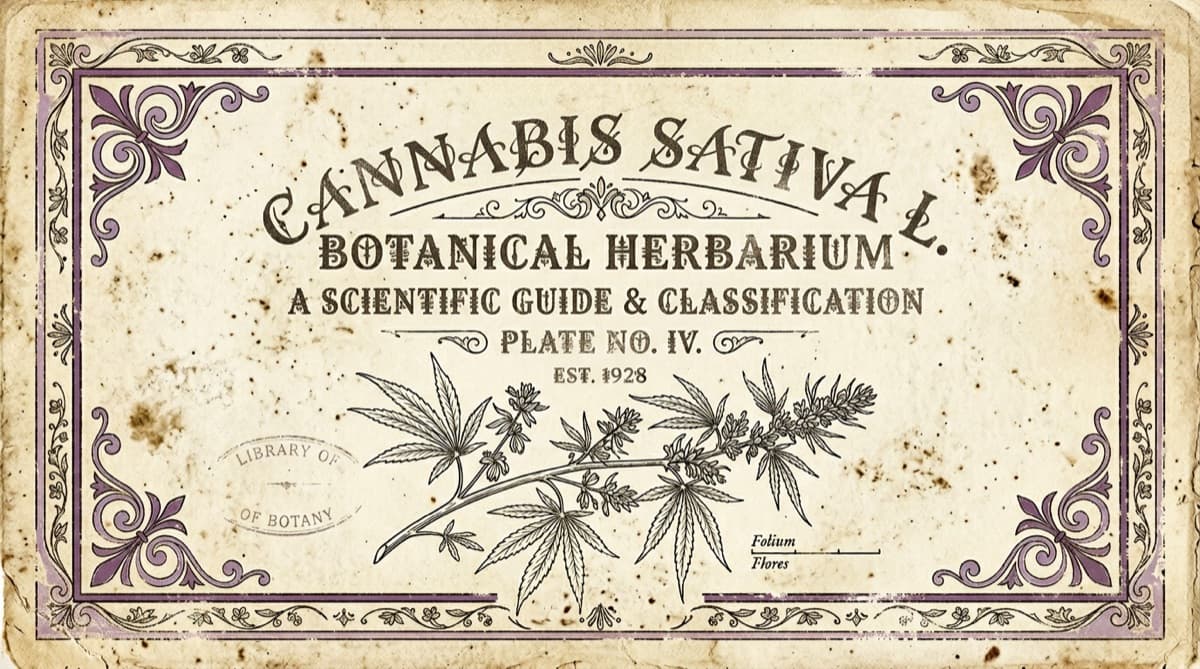
One plant, three famous names, and three very different moods: cannabis sounds clinical, marijuana sounds political, and ganja sounds cultural, musical, almost ceremonial. Yet all three can point to the same species. That is what makes this topic so fascinating: language does not merely describe the plant, it quietly tells us what a society fears, sells, studies, or celebrates.
This article is not a dry glossary. Think of it as a small linguistic detective story. We follow three words across trade routes, empires, newspapers, laboratories, songs, and laws to see how cannabis changed its passport every time it crossed a border.
1. One plant, many identities
If a botanist, a journalist, a customs officer, and a reggae musician walk into the same room, they may all talk about the same plant and still choose different words. That choice is rarely accidental.
-
Cannabis usually signals botany, medicine, research, or regulation.
-
Marijuana / marihuana often carries the weight of twentieth-century U.S. politics and media.
-
Ganja points toward South Asian roots, diaspora culture, spirituality, and music.
The vocabulary matters because words frame expectation. Before a reader learns anything about chemistry or law, the name already suggests whether the subject belongs to a pharmacy, a police file, a ritual, or a countercultural scene.
2. “Cannabis”: the oldest and most formal passport
The most internationally neutral term today is cannabis. It comes to modern English through Latin Cannabis, itself borrowed from Ancient Greek κάνναβις (kánnabis). From there the trail disappears into deeper Eurasian history.
Older than one empire
Linguists still debate where Greek got the word. The leading theories point not to a single neat origin, but to a zone of contact:
-
Iranian and steppe-language parallels hint at trade in fiber, rope, cloth, and plant matter.
-
Classical writers linked hemp-like plants to Scythians and other Eurasian peoples, suggesting the word traveled with goods as much as with ideas.
-
Comparisons with terms such as Akkadian qunnabu do not prove a single ancestor, but they do suggest impressive antiquity.
In other words, cannabis likely did not begin as a fashionable literary term. It belonged first to the practical world: fields, cords, textiles, seed oil, and commerce.
Why “cannabis” sounds modern
Ironically, the oldest word now feels the most modern. That is because science, medicine, and regulation adopted it as the clean umbrella term. In contemporary use, cannabis can cover:
-
industrial hemp,
-
medicinal products,
-
high-THC flower,
-
the plant as a legal or botanical category.
It sounds precise because institutions made it precise.
3. “Marijuana”: when a word crosses a border and changes tone
The story of marijuana is less ancient and far more political. The form marihuana / marijuana circulated in Mexican Spanish and then entered English through borderlands culture. Once it crossed into the United States, the word changed register: it became not only descriptive, but strategic.
A word with disputed roots
Scholars still disagree on the exact origin. Popular explanations include:
- A nineteenth-century Mexican colloquial term for psychoactive cannabis.
- The catchy but unproven folk etymology “Maria + Juana.”
- More speculative migration-linked theories involving Chinese linguistic influence.
No version has universal acceptance. But uncertainty is part of the intrigue: the word arrives in history already wearing a little smoke.
Why it mattered in the U.S.
By the 1930s, marijuana was politically useful precisely because it sounded less clinical and more foreign than cannabis or hemp. In newspapers, campaigns, and official rhetoric, the term could trigger associations with:
-
Mexico and migration,
-
urban danger,
-
racialized panic,
-
moral decline.
This is why historians often treat the word not just as vocabulary, but as a tool of framing. The Marihuana Tax Act of 1937 did not simply regulate a plant; it helped fix one particular name in the public imagination.
The word today
That does not mean the term must always be rejected. It still appears in law, media archives, pop culture, and everyday conversation, especially in the United States. But it carries baggage. If cannabis sounds like a lab label, marijuana sounds like a headline with history attached.
4. “Ganja”: from Sanskrit to the global cultural imagination
Then comes ganja, perhaps the warmest and most atmospheric of the three. The word comes from Sanskrit गांजा (gāñjā), and in South Asian contexts it often refers to the dried psychoactive flowering tops of the plant, in contrast to other preparations such as bhang.
More than slang
What makes ganja powerful is not just age, but cultural travel. From South Asia, the word moved outward through trade, empire, labor migration, and diaspora communities. Along the way it entered:
-
Caribbean speech,
-
Jamaican and Rastafari contexts,
-
British multicultural English,
-
global music and youth slang.
Unlike cannabis, which often feels institutional, or marijuana, which often feels political, ganja tends to sound lived-in. It belongs to songs, street language, ritual memory, and identity.
The spiritual layer
In parts of India, cannabis traditions intersect with stories of Shiva, festivals, sadhu practice, and older devotional worlds. That does not mean every use is religious, but it does mean the word carries more than market slang. When people say ganja, they may be naming a plant, a mood, a subculture, or a sacred association all at once.
5. The shadow companion: “hashish”
Any serious conversation about cannabis vocabulary soon brushes against hashish. The English word comes from Arabic ḥashīsh, originally connected to dried grass or herbage, and later narrowed in many languages toward resin-rich cannabis preparations.
Why mention it in an article about cannabis, marijuana, and ganja? Because hashish shows how vocabulary also follows processing methods. Some names track the species, others track the form in which people encounter it. That is why cannabis language is never just botanical; it is commercial, sensory, and social.
6. Why these names still matter
The difference between these words is not merely academic. In real life, word choice shapes trust.
-
In a medical setting, people expect cannabis.
-
In a historical U.S. context, they may encounter marijuana.
-
In music, diaspora, or spiritual contexts, ganja may feel more natural.
Each term opens a different door into the same subject. One sounds regulated. One sounds contested. One sounds cultural.
For a modern brand, publication, or dispensary, that matters. Good language helps readers feel oriented rather than manipulated. It signals whether you are educating, sensationalizing, or borrowing someone else’s culture without understanding it.
Quick table
| Term | Deep background | Typical tone today |
|---|---|---|
| Cannabis | Greek-Latin scientific lineage with older Eurasian roots | Neutral, botanical, medical, legal |
| Marijuana / marihuana | Mexican Spanish into U.S. public discourse | Political, historical, media-shaped |
| Ganja | Sanskrit and South Asian usage, then diaspora spread | Cultural, musical, spiritual, informal |
| Hashish | Arabic root linked to plant matter and later resin forms | Product-specific, historical, international slang |
Why LIBRARY cares
At LIBRARY we care about words because language shapes experience before a customer sees a menu or reads a law. Saying cannabis can signal clarity and regulation. Saying ganja can signal culture and atmosphere. Saying marijuana may still be useful when discussing U.S. history or legal archives, but it should be used with awareness, not autopilot.
That is the hidden lesson of etymology: words are never just labels. They are little containers full of trade routes, fear campaigns, rituals, songs, science, and memory.
LIBRARY editorial voice
We like precise language without pedantry. This article is about context, not romanticizing rule-breaking. If you want practical next reading, visit our FAQ, browse the catalog, or explore more stories in the blog. And because regulations in Thailand continue to evolve, always check the current legal framework before making decisions.
Informational only; not legal or medical advice.
Quick Answer
Cannabis is the oldest and most neutral scientific term; marijuana carries strong U.S. political history; ganja comes from Sanskrit and traveled through diaspora, music, and spiritual culture.