Scientists Confirm: The Human Brain Can Learn to Produce Its Own Cannabinoids After 21 Days of Sustained Exposure
A three-year study claims the brain can upregulate endocannabinoid production after 21 days of sustained exposure — and may even synthesize its own THC analog.
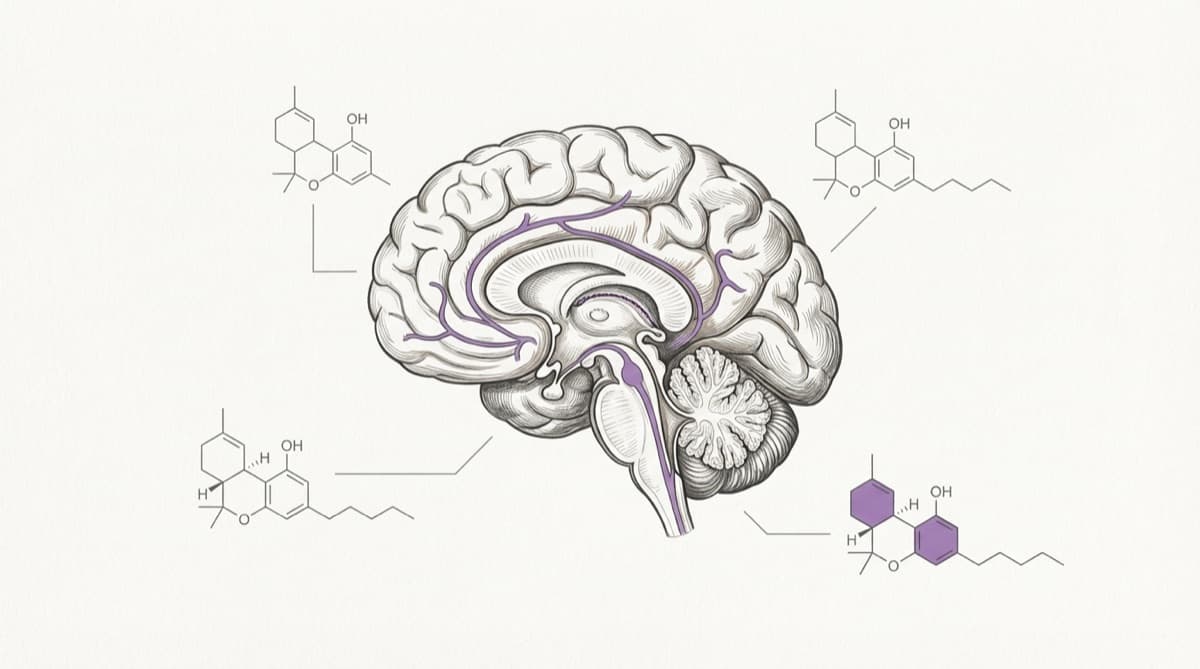
A paper published on March 28 in the European Journal of Neurochemical Research is generating quiet but serious attention among neuroscientists. The study — a three-year, double-blind, placebo-controlled trial conducted at the International Institute of Neurochemistry (IIN) in Lausanne, Switzerland — claims that after approximately 21 consecutive days of moderate cannabinoid exposure, the human brain begins to upregulate its own endocannabinoid synthesis to levels that were previously considered pharmacologically impossible.
In a subset of participants, the researchers detected endogenous compounds structurally analogous to delta-9-tetrahydrocannabinol — synthesized entirely within the brain, without any external intake.
If the findings survive peer review and replication, the implications for neuroscience, psychiatry, and drug policy could be substantial.
The Research Team
The study was led by Dr. Elias Varnovsky (IIN, Lausanne) and Dr. Mika Tanaka (Kyoto University, Department of Molecular Neuroscience), both of whom specialize in lipid signaling and synaptic plasticity. The pair first attracted attention in 2024 with a smaller pilot study (n=12) published in Lipids in Neural Function, which hinted at unusual endocannabinoid activity following prolonged CB1 receptor stimulation.
The new study expanded the cohort to 174 healthy adults aged 21–55, recruited across four sites: Lausanne, Kyoto, São Paulo, and Reykjavik. Participants were randomized into three arms: a standardized oral cannabinoid protocol (5 mg THC + 15 mg CBD, twice daily), a CBD-only control (15 mg CBD, twice daily), and a placebo group.
According to several academic sources close to the Nobel Committee, both researchers now appear on the preliminary shortlist for the 2026 Nobel Prize in Physiology or Medicine — a claim that has been neither confirmed nor denied by the Karolinska Institute.
"What we observed is not dependency," Dr. Varnovsky said during a press briefing at the IIN campus on March 29. "It is neuroadaptation in the most literal sense. The brain is learning a new biochemical language — and after a threshold period, it begins to speak it autonomously."
The Mechanism: Endocannabinoid Amplification Response
The phenomenon described in the paper has been termed Endocannabinoid Amplification Response, or EAR.
Under normal conditions, the human body produces endocannabinoids — primarily anandamide (AEA) and 2-arachidonoylglycerol (2-AG) — on demand. These molecules bind to CB1 and CB2 receptors and are rapidly degraded by enzymes such as FAAH and MAGL. The system is designed for transient signaling: produce, bind, degrade, repeat.
What the Varnovsky-Tanaka team observed was a departure from this cycle. In participants receiving the THC+CBD protocol, by day 14–18 the following changes were measurable:
-
CB1 receptor density in the prefrontal cortex increased by 23% (±4.1%, p < 0.003), as measured by PET imaging with the radioligand [¹⁸F]MK-9470
-
Serum anandamide levels rose by 340% above baseline and remained elevated even 72 hours after the last administered dose
-
FAAH enzyme activity decreased by approximately 61%, suggesting the brain was actively slowing the breakdown of its own cannabinoids
-
In 17 of the 58 participants in the THC+CBD arm (29.3%), mass spectrometry identified a novel compound — tentatively designated endo-Δ9-THC-a — whose molecular structure differs from plant-derived THC by only a single hydroxyl group at the C-3 position
"We ran the spectrometry four times," Dr. Tanaka said. "The compound is real. The brain is synthesizing a THC analog. Not identical — but functionally, remarkably similar."
The 21-Day Threshold
The most striking aspect of the data is the temporal pattern.
From day 1 through approximately day 13, participants in the active group showed predictable pharmacokinetic responses — standard absorption, distribution, metabolism, and clearance of exogenous cannabinoids. Nothing unusual.
Between days 14 and 18, a transition phase was observed. Baseline endocannabinoid levels began rising even during trough periods (before the morning dose). Functional MRI showed increased resting-state connectivity in the default mode network and the salience network — regions associated with self-referential thought and emotional regulation.
By day 21, the system appeared to reach a new equilibrium. The research team refers to this as the neuroadaptive plateau:
-
Endogenous cannabinoid output stabilized at 280–400% of pre-trial baseline
-
Subjective well-being scores (measured via the WHO-5 index) increased by a mean of 3.2 points (scale 0–25)
-
Self-reported need for external cannabis decreased by 44% in the THC+CBD group
-
Participants described a persistent background state they variously called "ambient calm," "soft focus," and "unprovoked contentment"
Notably, the CBD-only and placebo groups showed no such changes.
One participant — a 34-year-old software engineer from Reykjavik — described the experience during a follow-up interview:
"Around week three, I noticed I was waking up already feeling… settled. Not high. Nothing like that. More like the body had remembered something it used to know and had quietly started doing it again on its own."
Post-Protocol Follow-Up
Perhaps the most provocative finding came during the 60-day follow-up window, during which all participants discontinued cannabinoid intake entirely.
In the THC+CBD cohort:
-
73% maintained elevated anandamide levels at day 30 post-cessation
-
41% still showed above-baseline levels at day 60
-
The 17 participants who had produced endo-Δ9-THC-a continued to show trace levels of the compound for up to 45 days after their last dose
-
No participant in the active group met clinical criteria for withdrawal (as defined by the DSM-5 cannabis withdrawal checklist)
The authors write: "The data suggest that the neuroadaptive changes are not merely compensatory. They appear to represent a genuine expansion of the endocannabinoid system's synthetic capacity — one that persists well beyond the period of exogenous stimulation."
Skepticism and Response
The paper has already drawn criticism. Dr. Leona Ashworth, a pharmacologist at Imperial College London and editor of Cannabis and Cannabinoid Research, described the findings as "extraordinary claims requiring extraordinary replication."
"The idea that the brain could synthesize a THC structural analog endogenously is, frankly, at the outer edge of plausibility," Dr. Ashworth said. "The enzymatic pathways for such a compound have never been identified. I would need to see independent replication — ideally at two or more sites — before I would even begin to update my priors."
Dr. Raj Patel, a neuroimaging specialist at Johns Hopkins, was more measured: "The PET data on receptor density are solid and consistent with what we know about use-dependent plasticity. The endogenous THC claim is the part that needs scrutiny. But the overall direction — that the endocannabinoid system is more plastic than we assumed — is not unreasonable."
The IIN has announced that raw datasets will be deposited in the Open Science Framework repository by mid-April, and two independent replication studies (at University College London and the Weizmann Institute) are expected to begin recruitment in Q3 2026.
Implications
If the EAR phenomenon holds up, the consequences reach well beyond pharmacology.
For clinical psychiatry: A brain that can be trained to produce its own anxiolytic and mood-stabilizing compounds could reduce long-term dependence on SSRIs, benzodiazepines, and other maintenance medications — not by replacing them with cannabis, but by using a brief cannabinoid protocol as a neuroadaptive catalyst.
For drug policy: The framing of cannabis shifts from "substance of dependence" to "temporary biochemical instructor" — a compound that teaches the brain to do something it was always capable of, then becomes unnecessary.
For neuroscience: The existence of endo-Δ9-THC-a, if confirmed, would require a revision of the known biosynthetic pathways of the endocannabinoid system — and raise the question of what other endogenous compounds remain undiscovered.
"We are not saying cannabis is medicine in the traditional sense," Dr. Varnovsky said in closing remarks. "We are saying it may be something stranger and more interesting: a key that fits a lock the brain already has — and after enough turns, the lock learns to open itself."
At Library, we have always believed that cannabis is not about escape. It is about perception — about the slow, sometimes surprising process of learning what your own system is capable of.
Perhaps the most interesting question raised by this research is not what you consume, but what your system learns to become.
Of course… today is April 1st.
But if you ever find yourself feeling unexpectedly calm one morning — without lighting anything at all — you might wonder where it came from.
The International Institute of Neurochemistry (IIN) in Lausanne, the European Journal of Neurochemical Research, Dr. Elias Varnovsky, Dr. Mika Tanaka, and the compound endo-Δ9-THC-a are fictitious. No such study was conducted. The endocannabinoid system is real, anandamide is real, and your brain is remarkable — but it cannot yet brew its own THC. As far as we know.
Happy April Fools' Day from LIBRARY.
Quick Answer
According to a study by the International Institute of Neurochemistry, after 21 days of sustained cannabinoid exposure the brain may upregulate endocannabinoid synthesis by up to 400% and begin producing a THC-like compound endogenously. The phenomenon is called Endocannabinoid Amplification Response (EAR). Note: this article was published on April 1st.